Translating biomarker research into clinical UI concepts
Outcomes
-
Designed two modules for the Veris app that could be tested with young people to collect data and verify the research.
-
Children aged 5–8 were engaged enough in the activities to collect valid data.
Problem
Neurodevelopmental assessments are expensive and take a long time. Early stage research into biomarkers provides hope that understanding these markers could make full assessment redundant. Testing this research at Healios was a unique opportunity.
What I did
Kinetic drawing module
Children traced pre-defined shapes on screen with a finger. Micro variations in that movement were the data. The module needed to be gamified to keep young children engaged, without introducing difficulty that would skew the results.
I made all the artwork for this module as well as designing the flow and doing animations for the instruction screens using AE and Lottie.
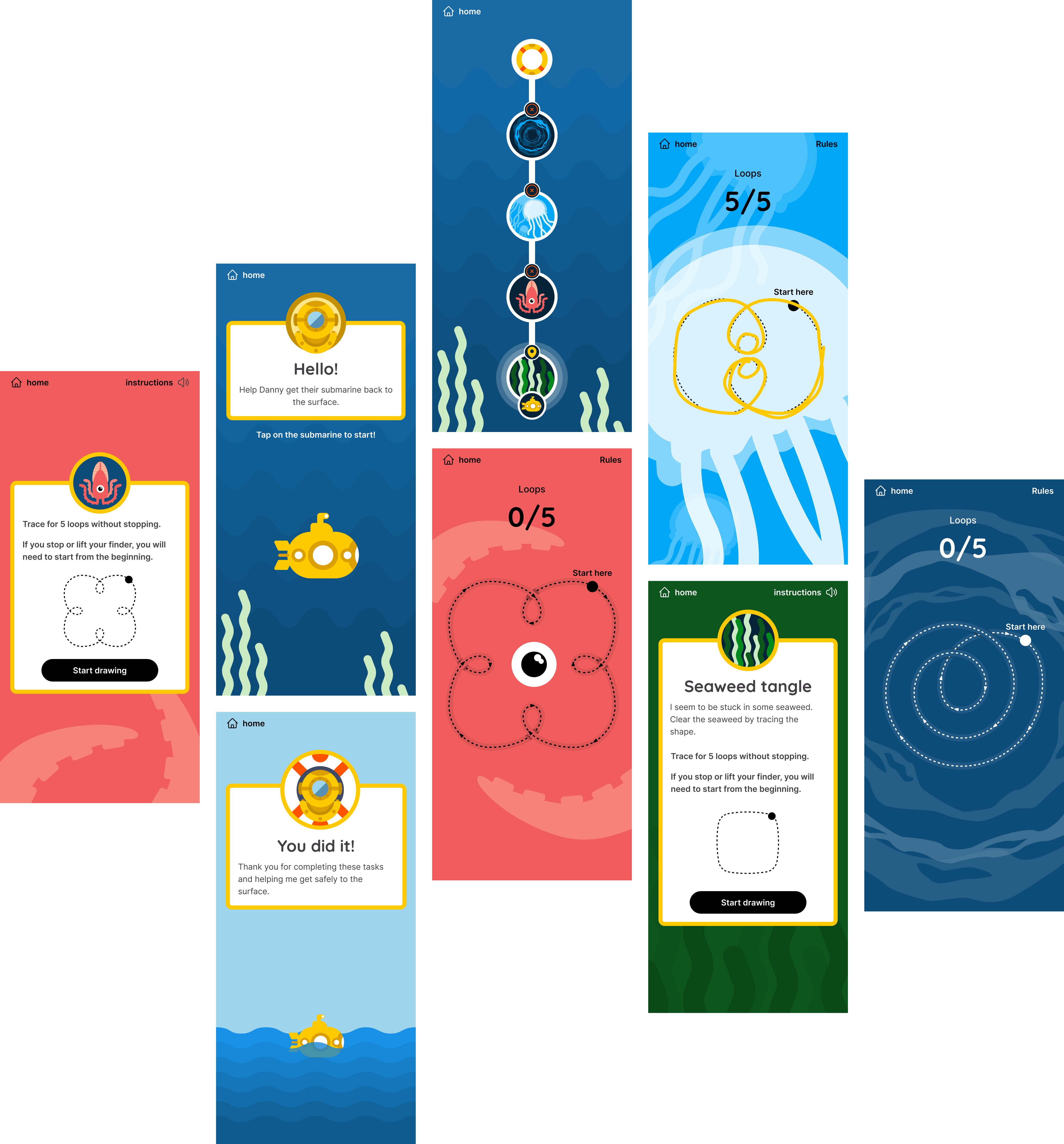
Kinetic movement module
Children followed a sinusoidal arm movement pattern while watching a screen they were also moving around. The challenge was keeping instruction visible and readable during large physical movements.
The most important part of this design was the instructional animation I produced in After Effects. Speed to testing was more important than polish here, so I used my own voiceover and basic music to keep the project moving.